Showing posts with label MemoQ. Show all posts

Jun 14, 2024

Substack in #xl8 & #l10n

 As related in my last post, I've been testing the Substack platform as an alternative means for distributing and managing the kind of information I've published for many years now on this blog, professional sites and social media, course authoring platforms, YouTube, Xitter, Mastodon and probably a few other channels I've forgotten. And I'm quite surprised to find any expectations I had to be exceeded at this point. On the whole I can do a better job of creating accessible tutorials and other reference information there, and there is far less effort involved with maintenance, style sheet fiddling and whatnot.

All my various projects there can be found here on my profile page.

Currently, these are the
Other plans include The Diary and Letters of Charles Berry Senior, a US Civil War veteran from Yorkshire, England, who participated in Sherman's march to the sea and who is my great-great grandfather. Some of his records exist in very deteriorated form in a university archive in the United States and can be found online, but much is missing, and I am in possession of the complete transcript prepared by one of the man's daughters more than 100 years ago when the family feared the information would be lost to the forces of material decay. I'll be preparing clean text from her handwritten record (the typescript done by a cousin about 50 years ago was lost and probably contains more errors) and probably an audio reading. There's some hard stuff there, as well as some surprises and interesting lessons in how our world has changed in the past 160 years.

And at some point I'll probably share some of my culinary obsessions as well as what life was like traveling on the other side of the Iron Curtain sans papers or in dingy Paris bookshops and refugee hotels 40 years ago and more.

This past week, I've done a big blitz on memoQ LiveDocs, for which there are still another dozen or so drafts to be finished, and a lot of stuff from my CAT tools resource online class from last year should be appearing there in updated form in due course. There isn't a lot of translation-related activity that I've found on Substack, at least not for the technical side of things, but a lot of historians and authors I follow are very present there, so I'm hoping the better half of my translation technologist friends will join the Substack party at some point.

Most of my new text, video and teaching content will appear on those Substack channels. It's simply far easier to manage, and there you won't have the same RSS headaches you might have here. And the damned editor of Google Blogger just keeps accumulating bugs I don't have to cope with in Substack. And don't get me started on bloody Wordpress!

I hope to see you in my Substack channels soon! I think there will be something like a memoQ QA course there before the summer is over....

Mar 17, 2024

Best memoQ Translator Pro deal ever — until March 28th, 2024

In the fifteen years I've been using memoQ, I have never seen a discount this good on new perpetual licenses for the desktop translator version of memoQ: 50% off the retail price. For those whose service and maintenance agreements have been lapsed for three years or more, this is also the best price you'll see for getting up to date with the latest version and a new SMA covering any releases in the 365 days following your purchase. The current version of memoQ is 10.5.


Now lately I've heard some people claim that there have been no worthwhile improvements for individual translators since memoQ 205 (version 7.8) or so. Nonsense. Have a look at the "What am I missing?" page to see what changes have occurred since the version you currently use and whether and upgrade is worthwhile for you. If your version is older than 8.0, all you'll see on that page is changes since that version, but there are a lot of good ones to benefit individuals. memoQ server revenue may comprise the vast majority of profits for the company, but the rest of the user base has hardly been neglected. (What has been neglected is good teaching and reference tools for the most part, but that applies to server customers too.)

In the versions 8.x, major improvements were made to term bases that I personally begged to see for years, and a lot has been done to upgrade the user-friendliness of LiveDocs corpora, backup processes for projects and entire memoQ installations, improved regex handling with a special library tool that allows us to focus on getting work done, not idiotic syntax to drive mere mortals mad... and more. These are just a few of the many things that have confirmed time and again that my friends at memoQ Ltd. really are top class and well ahead of the pack.

So take the plunge if you need the latest features, and tell others not to miss a chance they aren't likely to see again anytime soon.


Dec 29, 2023

Last chance: memoQ project management. And the translator training course.

Note: This post has been updated to reflect a planning change. The five-day trainer training course has been replaced with a two-day (eight hour) course for translators to master key memoQ features.


The CETAPS institute at Universidade Nova de Lisboa FCSH has planned a week-long (20-hour) memoQ online project management training course and a two day (8-hour) course on memoQ mastery for translators in the latter part of January 2024 which might be of interest. 

The first course (from January 22nd to 26th) will be for those in project management roles or similar functions using memoQ TMS servers; it will begin with a day of intense review and instructional guidance for memoQ basics in online projects from a translator and reviewer perspective and proceed from there to topics such as online project creation and administration, rights and resource management, template use, optimal preparation workflows, mid-project updates and more as well as participant-specific issues. The cost is €480.

The second course (from January 29th to 30th) is aimed at translators and reviewers, who want to better understand and handle project workflows for both their own projects and agency-created ones. This will include resource customization, project management, project templates, file import filters, and project navigation, including some regular expressions magic. The cost is €90.

Further information on the course and an enrollment form can be found HERE. The registration period has been extended and enrollments will be accepted through January 5th. Questions regarding the program and enrollment can be directed to Prof. Marco Neves (e-mail: mfneves@fcsh.unl.pt).

Certificates will be issued to all participants completing the courses. Course availability is subject to sufficient enrollment.


Nov 26, 2023

memoQ term base "roundup" chat


The last of the planned office hour discussions for the self-guided online course "memoQuickies Resource Camp" will be held on November 27th at 17:00 CET (8:00 PST). For those not already registered for the Zoom chats, the link to do that is HERE. If you have done so previously, the access URL is the same. The chat is open to everyone, regardless of whether they are registered or not in the online course.

We'll begin with open Q&A time on any of the course sections in the term base unit or any other presentations of the subject matter by me on this blog or my YouTube channel. Afterward, I will show my general method for editing or updating term base content via Microsoft Excel exports brought in to the memoQ working grid, which facilitates certain kinds of changes or actions involving regular expression use. This goes beyond the possibilities of the integrated memoQ term base editor, which will also be presented briefly.

A recording of the talk will be made available later in the course structure.

In December the course will move on to discussions of QA profiles and other aspects of quality assurance in memoQ, with some live discussion possibilities to be announced. All course material will remain online for access until the end of March. More information on the memoQuickies Resource Camp can be found HERE.

Oct 18, 2023

An Unfiltered Look at memoQ Filters (webinar, 19 October 2023, 15:00 CET)


This presentation and discussion covered some of the challenges and opportunities to improve memoQ project workflows through correct filter choice and design. There are many different aspects to filters in memoQ, and the right choices for a given translatable file or project are not always clear, or different options may offer particular advantages in your situation.

Cascading filters - an important feature for dealing with complex source texts - are also part of the talk, not just the basics but also examples of going beyond what visible memoQ features allow, to do "the impossible". This session is part of the weekly open office hours for the course "memoQuickies Resource Camp", but everyone is welcome to attend these talks regardless of enrollment status. Those interested in full access to all the course resources and teaching may enroll until the end of January 2024.

To join sessions for the October and November office hours, register here.

After registering, you will receive a confirmation email containing information about joining the meeting. 

Here is an edited recording of the October 19th session, with a time-coded index available on YouTube in the Description field:

Oct 5, 2023

What's wrong with my segmentation (in translation)?

The fifth open office hours session for the self-guided online course "memoQuickies Resource Camp" discussed segmentation problems with documents imported to translation environments such as memoQ, Trados Studio, Phrase, Cafetran Espresso, etc. and various ways that these issues might be identified so that they can be corrected.

Segmentation problems waste enormous amounts of time, and bad segmentation rules are a plague on the translation and localization service community. Unfortunately, nearly all the rules I have seen, for all working environments, simply suck sewage. memoQ's rules usually suck less, but still....

This week's talk presented, among other things, some methods for identifying segmentation trouble spots quickly and easily with the use of special regular expressions describing common patterns followed by texts with troubled segmentation. And a Regex Assistant library has been provided (and will be updated during the course period) to help with all of this.

The video and related course pages will remain completely open to the public, with downloads available, at least through the end of 2023. After that the pages and resources may be taken down for updates and reorganization in other courses.

The video recording of the lecture "What's wrong with my segmentation?" can be accessed on YouTube (embedded below) or course participants can access the page to download it by clicking the "segmentation rules" icon at the top of this article.


An important part of checking the performance of your segmentation rules and possibly improving them is to have a good sampling of test data. One of my favorite sources for this are the European Community archives at the DGT, where EU legislation and other important information is available in a parallel corpus of all the official languages of the Community.

I have downloaded part of the 2022 DGT distribution and prepared a number of monolingual and bilingual corpora (about 2.6 million words, approximately 150,000 TUs) in EU languages and translation pairs. Moreover, information on my method has been published so that others can reproduce it for the languages that interest them.

Sep 19, 2023

Flirting with a Fiverr & more

If you always want to get paid...

Payment practices are a perpetual pain in Trashlation World. What professional translator or interpreter has not, at some point, faced difficulty getting paid for work delivered. Or in my case, consultant, independent solution developer and instructor, since I retired from translation three months ago and no longer accept such tasks in the increasingly thankless environment where they are requested.

Net never has become the modus operandi of too many wankers in the NMT-AI-MOUSE Fanboy and -gurl Klub, and when B of A, Barclays, Santander of some other clan of thieves fails to provide the desired credit for the Incredible Journey to Ruin, there will always be those AI Artists Formerly Known as Trashlators who understand that in matter of money, all that really matters is mindset.

Fuck you. Pay me. Well, imagine getting paid! Isn't that exciting? Fuck you. Pay me. I'm more excited by the structure of your fucking kneecaps and how fragile it is... SET YOUR MIND TO PAY ME.

But wait, Paulie, there may be a better way!

A perpetually solvent friend who owns a couple of German service companies once shared his secret: when in doubt, demand payment in advance. When there is no doubt, demand double. But what if the prospect just walks away? Offer them a peck on the check and hold the door for them in gratitude for the grief they are about to save you.

Times are hard. But payment practices are, alas, too often limp. Like a little mushroom past its sell-by date and full of mold and other things best not named.

I'm personally fortunate not to deal with many deadbeats; avoiding business with Italian and American companies certainly helps. Well, I have a soft spot for the Portuguese, but let's not go there.

I have another problem. I had administrative work even more than I hate not getting paid, and since I acquired a retired surgeon as a billing assistant and, at about the same time, took on a new role as a trainer for incoherent billing software like SAGE, not getting paid has been a source of surprising pleasure. But our five dogs still demand food, and if it does come in bags and come on time, well... there is that extra weight I'm carrying, the Portuguese pit bull is fond of reminding me.

And I am sure that many clients and friends and friends with the misfortune to be clients keep a special dartboard with my face on it for those times I get around to writing the bill after a year of so.

Fuck you. Pay me. Well fuck you. Write the fucking bill. Yeah, right, you tell me again how all that works here in Portugal where the tax laws are so screwy that almost none of the invoicing tools typically used by translators, companies involved with language services (regardless of whether they actually provide any) in other countries are compliant with Portuguese tax law, so I often feel myself well and truly fucked.

Enter the performance platforms such as Fiverr, which I am beginning to consider for certain recurring requests where I have asked Dios for a better intake process in which people tell me exactly what they need, provide the means of doing that, including the money to pay for the electricity to drive the tools I use to reach their goal and, well, just let me get on with it and make something nice and bless them for a change.

I started toying with platformed pre-payment about four years ago, when I started using Teachable as a way to demonstrate to memoQ and others how professional tools instruction could be improved and content could be shaped in more useful ways. I may not have been successful in convincing others to Do the Right Thing, but now that I have more time on my hands and have resigned myself to take a shot at that myself and maybe actually charge for all that knowledge that so many people mint money with, I am really, really glad that the Portuguese tax mysteries are handled in a way that does not involve me at all and is completely correct. No more constant special requests for special invoices for special people in special countries and special claims on my non-existent admin time.

So, that's the news, I guess. Next time you need a training video, a dash of regex for your project soup, a magical mysterious import filter for Formats Unknown or the like, there's a process. And it's not "fuck you". That's between consenting buyers and the platforms from which they draw their services....


Sep 17, 2023

Say something, I'm using memoQ!


It's a reasonable approximation of reality to say that no good deed goes unpunished, and that can certainly be said for the team of software artists formerly known as Kilgray. The groundlings have little idea of how very concerned the machine is to deliver the right god in communion for our times. No sausage from the golden Trados calf, no. no. The right Phrase is everything, and to delve the source of Memory for this revelation is Our Life's Work.

The ways of the Great CAT who art in Hungary are a mystery, and those lacking Faith are taken aback at a lack of transparency. But I, faithful in my productivity pilgrimage, brought my offering to the High Priest in the temple. 

It was the Time of Offerings, of intelligence sacrificed to artificialities, offerings burnt before an MT God. Ours is a Merciful One, and yea though I walk slowly, very slowly through the Valley of Technical Debt I fear no loss of data, for I am not a user of Trados nor of Wordfast. In Orange Ecstasy I linger, savoring the gentle crush of bugs between my gnashing teeth.

Initiated in the Mysteries I am, the Nine to One of the mighty dollars, flowing like a river of corporate honey or puddling as piss in a petty pool on the commons. 

But our Holy Ground needs a good charge of urea to grow the next best thing, so pay all ye faithful for your SMA renewal before the end of September, when there shall be Weeping and Gnashing of Teeth as the price of memoQ and its servicre and maintenance contract increase by a modest 20% for the nifty Translator Pro version.

And fear not, for I am with you. My rod and staff are needed in the garden to prop up an apple tree, but I can offer this at least: if you blow the deadline and have to pay an extra €20 or so for the SMA renewal this year after October 1st, evidence of that in the form of a purchase invoice or somesuch which reaches me by the end of 2023 on the hidden paths of e-mail or social media will receive as a blessing a discount "coupon" worth twice and half again that for a stay at the memoQuickies Resource Camp until March 2024.

Or if the high priest ever gets back to me as he said he would, maybe there will be an alternative route. You are all nonetheless blessed that you have in your professional hands a tool, which for all its shortcomings, beats the competition to death if you know how to unlock its power (which few really do).

Sep 16, 2023

The memoQ Regex Assistant Revisited at 15:00 CET on 21 September 2023!


Eleven months ago I was supposed to talk about terminology in a three-hour evening class taught by one of my friends at Universidade Nova de Lisboa, but I was so excited about the progress of the quality team I was training at one of my agency clients in Portugal that I twisted what was expected to be my usual straightforward 90 minute lecture on term base best practices in memoQ into an unusual take on the role regular expressions might play in terminology management.

That was a weird one, for sure, but the potential I saw was very real. I was defining "terminology" in rather broad terms to include not only more efficient term base management based on problem patterns but also translation memory clean-up, better filtering and find/replace operations in the working grid and QA.

"What the heck has all that got to do with scary ol' REGEX?" you're probably thinking.

Well, all this was triggered by memoQ's recent release of the One Ring Thing we've been needing to unify our memoQ management processes for the routine use of regex by The Rest of Us. The Regex Assistant. The Nazgul of Trados World are surely jealous.

That quality team I was training, my friends at Linguaemundi. is headed by Inês Lucas, about whom I had heard many good things for years from her enthusiastic professors at university but whom I hadn't actually met until she was hired by the agency a few years ago. At the recent memoQ Fest in Budapest, she explained how changing the approach to regex mastery from the struggles of syntax to organizing and applying packaged solutions in well-engineered processes significantly upgraded their work capacities and reduced stress levels. When you cut the nerdy crap and focus on understanding what solutions are called for particular tasks, everything gets much easier.

I was so amazed to see people who had struggled for years to learn regex well enough for simple tasks suddenly become solution powerhouses that I put together (rather spontaneously) a series of three online 90-minute workshops, which were repeated a month later. And new refinements to these methods come each time the ideas are presented.

The raw recordings of those six workshops are included in the current online course ("memoQuickies Resource Camp"), but one - the first of six - is publicly available on YouTube, where you can have a look.

However in the memoQuickies Resource Camp, a self-guided course that is serving as a platform for me to organize and distribute the best resources from my 14 years as a memoQ user, solution provider and trainer before I retire, I'll be taking another more streamlined pass at teaching some of the best possibilities for using memoQ Regex Assistant resource libraries. The webinars offered in most weeks of the course are simply an overview of the current topic emphasized in the course and also serve as a Q&A platform and a means of offering some different perspectives on information from the self-guided units. Recordings are always added to the course for later viewing.

This coming Thursday at 15:00 Central European Time, I'll give a brief overview of the Regex Assistant much like the public YouTube video does and answer any questions that attendees might have. Further information and an event notice can be found here on LinkedIn.

You can join the webinar with this link. The meeting ID is 878 3540 2561, and the passcode is 385434

Sep 11, 2023

memoQ "Auto-translation Roundup": 14 September 2023 at 15:00 CET


This week's public lecture for the "memoQuickies Resource Camp" on Thursday, September 14, 2023, at 3:00 p.m. Central European Time (2:00 p.m. Lisbon time) will be a summary of currently available auto-translation rules on the course pages which are open to everyone (enrolled or not) and those restricted to registered participants. This is all about getting to work now with stuff that is ready to go, and how to adapt that stuff for clients with different requirements.

So if you want to get right  down to productive work using available memoQ auto-translation rulesets in translation, review and quality assurance without wasting time on learning bloody regex, this is for you.


A recording of the talk will be available to all registered course participants afterward.

Last week's lecture, "Auto-translation Rules for Everyone", is available here.

Oh, and next week at the same time we'll be talking about the memoQ Regex Assistant and all the cool libraries available for QA, filtering, find & replace and other tasks.....

Icons of the resources covered im the memoQuickies Resource Camp


Sep 4, 2023

New online course: "memoQuickies Resource Camp"

Summer is almost over, but technically, "camping season" will continue in memoQ World until November 30th. Or maybe January 31st, depending on how you count.

Today, a three-month journey of exploration begins, covering six important kinds of resources to make work with the memoQ translation desktop and server environments more pleasant and efficient... and profitable. This self-guided online course will give participants full access to my 14 years of cumulative experience as a memoQ user translating, managing projects and developing hundreds of solutions with this world-leading productivity tool.

Click here or on the icon bar above to have a look at the course description and to see (and maybe download) some of the publicly available information and resources for better work in many language pairs. 

The emphasis of teaching will shift to a new resource every two weeks (with auto-translation rules as the main topic for the first two weeks), but throughout the course, information will be added continuously to all topic sections as I trawl through, sort, upgrade and publish the best or most interesting stuff from my archives. And course participants have access to open virtual office hours each week on Thursdays and some other occasions, where any questions can be asked and special requests made.

A special enrollment discount of 40% is available for the first week (code: HALFOFFLAUNCH) until September 10th, but you can join at any time and work with any of the material posted, ask questions and receive feedback. Learning material and downloadable, ready-to-use and -adapt resources will continue to be added until the end of November, and the full course will remain online through January 2024. Enrollment fees and content are subject to change without notice.

Addendum 1: On Thursday afternoon, September 7th, 2023, a presentation was made to introduce the first course topic - "Auto-translation Rules for Everyone". The recording and slides can be found here.

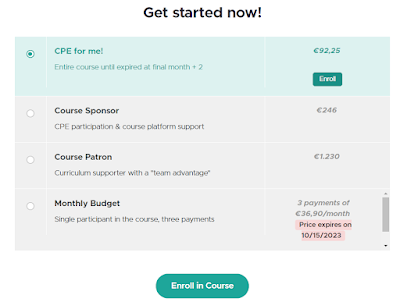
Addendum 2: Payment options for groups and monthly budgets have been introduced now. These options enable teams, departments and organizations to obtain blocks of passes for their members to receive continuing professional education in translation workflow tools. The host site applies VAT and other taxes where relevant and generates appropriate invoices. All relevant information can be found at the bottom of the information and enrollment page.


Mar 2, 2023

memoQ Regex Assistant workshops re-run

The series of three workshops on the use of regex resources in memoQ, with a particular emphasis on the integrated Regex Assistant library, has been updated and will be offered again on March 9, 16 and 23 from 3:00 pm to 4:30 Lisbon time (4:00 pm to 5:30 pm CET, 10:00 am-11:30 am EST).

You can register here to attend any or all of the three sessions:
https://us02web.zoom.us/meeting/register/tZEpde-sqTkvGtCdMsrBl825tFrpDQ98FkAI

This is an evolving course, with the content continuously adapted in response to new questions, workflow challenges and process research as well as interoperability studies with other tools. Participants in the last series asked quite a number of interesting things during and after the talks, and their questions provided excellent material for new examples and approaches, and I hope for the same experience in this round.

The memoQ Regex Assistant is a unique library tool introduced in its current form in memoQ version 9.9. The little bit of public discussion there has been about this tool is quite misleading. Contrary to the "pitch" from memoQ employees and nerdy fans in the user base, this isn't really a tool for learning regular expressions. There are much better means for doing that. And I have strong personal objections to the idiotic statements I hear so often that "everyone should learn some regex". What utter nonsense.

What everyone should do is take advantage of the power regular expressions offer to simplify time-consuming tasks of translation, review, quality assurance and more to ensure accuracy and consistency in language resources and translations. The Regex Assistant helps with this by providing a platform where useful "expressions" can be collected and organized with readable names, labels and descriptions in any language. These libraries can be sorted, exchange with other users and applied for filtering, find and replace operations, QA checks, segmentation improvements, structured translation of dates, currency expressions, bibliographic information, legal citations and more or exported and converted to formats for easy use in other tools such as Trados Studio, Phrase/Memsource, Transtools+ and more. All without the need to learn any regular expression syntax!

HTML created from a memoQ Regex Assistant library export
An exported Regex Assistant library converted to a readable format by XSLT

My objective is not to teach regex syntax. It is to empower users to take more control of their work environment and save time and frustration for their teams and enjoy more life beyond the wordface. To help with that, I provide some usable examples in a follow-up mail after each sessions: resources that you can use in your own work and share freely with colleagues. 

And in this next round of workshops, available for purchase, there will be some additional high value resources to help achieve better outcomes for work in particular language pairs and particular specialties, such as financial translations. These complex resources were developed over a period of years, sometimes at great cost. In the last session I'll be getting "down and dirty and a little nerdy" to show you my way of maintaining complex resources like these auto-translation rules and others in a very effective, sustainable way that enables you to adapt quickly to changing requirements and style guides.

Sign up free to join the fun here.

Jan 12, 2023

memoQ&A: The Regex Assistant in Practice

Note: there will be another series of workshops for this subject matter in March. Details are HERE. Register once to attend any or all of the sessions.

Users of memoQ version 9.9 or later have a powerful library tool available with which they can organize solutions or solution elements that use regular expressions and apply these without the complications of learning regex syntax. In each session, we'll look at different ways in which these portable libraries can be used, with a particular emphasis on solving common problems faced by translators and reviewers. Materials will also be made available to participants for later study and practice.

There will be three sessions of 90 minutes each on three consecutive Thursdays: January 19, January 26 and February 2 at 11:00 a.m. Lisbon time (i.e. noon CET). The first session will introduce the Regex Assistant library and its basic functions for organizing and exchanging information and then move on to specific examples of using the library to deal with common problems encountered in translation and review work. Particular emphasis in the first session will be on filtering and Find/Replace operations. 

The two later sessions will continue to explore filtering and options for making changes to texts and tags, and we will also take a tour of possibilities for using regular expression resources (from the library!) in other parts of memoQ such as the Regex Tagger, QA checks or auto-translation rules. As time permits, examples or requests from participants can also be explored. 

Those interested in joining the free sessions can register here.

Update: a recording of the first session is available here: https://youtu.be/KKR5aH5oGH8

To get a little taste of what's to come, have a look at this video created by a colleague last year:

Jun 17, 2022

memoQ Inside Out: Templates for Translators

In the summer of 2021, I was coaching a group of project managers and translators at a Portuguese service company, helping them to develop processes to overcome some rather complicated filtering and configuration challenges for recurring project types. It was clear to me that some of their difficulties could be overcome with the use of templates, but I had only recently begun to use these productively myself, and my attempts to communicate the subject matter overwhelmed the group for the most part, and examining the sample templates provided with memoQ installation simply made matters worse.

After several frustrating tutorial sessions and the failed acceptance of a template that I had developed which was tailored to a rather long wish list of automation that came out of our discussions, I decided that the only way to make the value of templates clear to this group of professionals was to wipe the slate clean, forget about all the myriad "wishes" and build a few simple templates which did just a few simple things. Starting from a new configuration with nothing at all. Surprisingly, less was indeed more, and the frustrated people began to "get it".

At almost the same time, my friend and colleague Marek Pawelec, a gifted teacher whom I often refer to quite objectively as "a consultant's consultant", mentioned that he was thinking of writing a book on memoQ templates, because he found that most people were unable to avoid the problems in the example templates provided with memoQ installation, nor were they able to work out most difficulties encountered when making their own templates. I could understand this very well, because the user interface in the configuration dialog for a template is not a stellar example of clarity, and it took me years to make proper sense of much of it. Disappointing, really, because I had been part of the chorus begging for something like templates for years, but when they were delivered, little about them made obvious sense to a dummy like me.

He sent me a chapter he had drafted, where I noted that he had adopted the same reductionist approach to getting started. A template with just a pick list or two for meta data to avoid the problem I've had for years of accidentally using different designations for the same clients, subjects, domains, etc. He had come to the same conclusion independently that the best approach to helping people use templates effectively is to start with one or two simple things they do all the time but often mess up.

That interesting draft chapter took time to evolve into a full-fledged guide of nearly 70 pages, with many practical, relatable examples of the kinds of challenges that individual translators (and many other service providers) often face in configuring translation projects. The topics cover the full range of options, from very simple tasks to extremely complex workflows involving pre-import scripts for preparing translation data and post-processing to recreate the original data formats. At every stage he offers clear examples and guidance on how to make things work in cases I have seen time and again in more than two decades of commercial translation work.

I had the pleasure to edit two drafts of this work as it neared completion. And pleasure really is the right word to use here. Marek has a very different explanatory style than mine, but one which I prefer for my own education. He manages very well the deep dive into messy details without drowning the reader in jargon and other unhelpful complexity. His guide gives valuable suggestions and information for every level of expertise. Much of the content can be understood and applied by unsophisticated new users of memoQ, but some of the details on content connectors and scripting can light a chandelier full of bulbs in the heads of alleged experts like myself.

Templates for Translators is an essential reference work for all memoQ users in my opinion, the sort of thing which ought to have been provided seven years or so ago when templates were introduced. Instead we got some imperfect examples which too often - especially in the hands of under-trained PMs at translation agencies - result in unworkable projects with 50+ translation memories and term bases grinding performance to a halt or a lot of mysterious and unwanted automation that does stupid shit like write unfinished and defective translations directly into one's master TM.

In addition to explaining clearly how to create your own helpful project shortcuts and automation from scratch, Marek included a great  chapter in which he describes in detail the templates provided for local projects, what works in them and what doesn't, and how to fix any issues so things work right for you. Even if you are a server user working primarily with online projects, there is a wealth of material in this version of the templates guide to help you work more effectively with templates for online projects. A second edition is planned for later this year, which will cover the additional features of templates for memoQ Server projects, but the real problems of most people working with those are covered in the basics presented in the "translators" edition, not in a lack of guidance on the many extra event "triggers" for online projects or other details. So if you are a server user, don't wait for the later edition, get this guide now, read every damned page and try to contain your exuberance as you finally understand a lot of stuff that has been confusing the Hell out of most of us for a long time. Then when the "server edition" of the guide is published, you'll be better prepared to absorb the increment of information it offers.

This book is now a valued part of my teaching "arsenal", and I recommend it without reservation to every memoQ user who aspires to work independently and create more effective processes for the special needs of various clients and subject matter. If you are a consultant or trainer at a serious level, it could well be considered malpractice to train without some of the information you'll find in Templates for Translators. But that's just what I see too often: discussions of templates glibly use the few defective examples installed with memoQ with little consideration given to how many translators should work in the real world with real, common client projects. This book is a welcome aid to move beyond all that and improve our satisfaction with the routine of translation in memoQ.

So for less than the cost of half an hour of consulting, the €30 invested here will save nearly anyone a large multiple of that and continue to pay dividends for a very long time, even if you understand and apply only 10% of the material presented. I charge far, far more to teach people less than that.

memoQ Inside Out: Templates for Translators is available for purchase at https://payhip.com/b/agrxM

May 30, 2022

Cleaning up language variants in memoQ term bases

While the idea of using sublanguage variants, such as UK, US or Canadian versions of English, sounds nice in principle, in practice these often create headaches for users of translation environments such as memoQ, particularly when exchanging glossaries with others but also when viewing and editing the data in the built-in editors. Many times I have heard colleagues and clients express a wish to "go back" and work only with generic variants of a language in order to simplify their management of terminology data. In the video below, I share one method to do so.

At 3:08 in the video, I share a little "aside" about how the exported term data can be edited to mark a term as forbidden (for instance, if its use is not desired by the translation buyer). Other changes to the information are also possible at this stage, such as the addition of context and use information for example. Other data fields from the term base can also be included in the export for cleanup if these play an important role in your memoQ term bases.

For years, users have requested an editing feature in memoQ that would make "unifying" language variants possible, but as you can see in this video tutorial, this possibility already exists and is neither difficult nor time-consuming to implement. 

If you do not wish to create a new term base to import the cleaned-up data (as shown in the video) but would rather bring it in to the same term base, it is important to configure the settings for your import correctly so that the original data will be overwritten and you won't end up with messy duplication of information. This is achieved with the following setting marked in red:


However, it should be noted that the term base will still have all the now-unused language variants, albeit with no entries for them. These can be removed by unchecking the boxes for the respective language variants in the term base's Properties dialog.

Speaking of the Properties dialog, some may have noted that in recent versions of memoQ there is an automated option for cleaning up those unwanted language variants:


Why bother with the XSLX route then? Well, depending on what version of memoQ you use, you may not have that command available in the dialog. But more importantly, I find that when merging data from various language variants I often want to do additional editing of the term information, and that really isn't possible when merging language variants in the Properties dialog. Doing the edits in Microsoft Excel gives you an overview of the data and the option to make whatever adjustments may be needed. In Excel you can also make further changes, such as altering the match properties for better hit results or more accurate quality assurance.

May 5, 2022

Understanding and mastering tags... with memoQ!

Everything you need to know... in 36 pages!

Following up on the success of his excellent guide to machine translation functions in memoQ, Marek Pawelec (Twitter: @wasaty) has now published his definitive guide to tag mastery in that translation environment. In a mere 36 pages of clearly written, engaging text, he has distilled more than a decade of personal expertise and exchanges with other top professionals in language services technology into simple recipes and strategies for success with situations which are often so messy that even experienced project managers and tech support gurus wail in despair. Garbage like this, for example:


This screenshot is taken from the import of The PPTX from Hell, which a frustrated PM asked for help with just as I began reviewing the draft of Marek's book about a month ago. It contained nearly 32,000 superfluous spacing tags and was such a mess that it choked all the best professional macros usually deployed to deal with such things. Last year, I had developed my own way of dealing with these things that involved RTF bilingual exports and some search and replace magic in Microsoft Word, but when I shared it with Marek, he said "There's a better way", and indeed there is. On page 23 of this book. It was much cleaner and faster, and in a few minutes I was able to produce a clean slide set that was much easier to read and translate in the CAT tool. A page that costs 50 cents (of the €18 purchase price of the guide) earned me a 140x return and saved hours of working frustration for the translation team.

The book covers a lot more than just the esoterica of really messed up source files. It is a superb introduction to dealing with tags and markup for students at university and for those new to the translation profession and its endemic technologies, and it has sober, engaging guidance at every level for experienced professionals. I consider it an essential troubleshooting work for those in support roles of internal translation departments and, quite honestly, for my esteemed colleagues in First Level Support at memoQ. Marek is a superb trainer and an articulate teacher, with a humility that masks expertise which very often surprises, delights and informs those of us who are sometimes thought to be experts.

I am also particularly pleased that in the final version of his text he addresses the seldom discussed matter of how to factor markup into cost quotations and service charges for translations. memoQ is particularly well designed to address these problems, because weighting factors equivalent to word or character counts can be incorporated in file statistics, offering a simple, transparent and fair way of dealing with the frustrations that too often leave project managers screaming and crying in frustration shortly before... or after planned deliveries.

Whatever aspect of tags may interest you in translation technology and most particularly in memoQ, this book will give you the concise, clear answers you need to understand the best actions to take.

The PDF e-book is available for purchase here: https://payhip.com/b/tHUDx


Forget the CAT, gimme a BAT!

It's been nine months since my last blog post. Rumors and celebrations of my demise are premature; I have simply felt a profound reluctance to wade in the increasingly troubled waters of public media and the trendy nonsense that too often passes for professional wisdom these days. And in pandemic times, when most everything goes online, I feel a better place for me is in a stall to be mucked or sitting on a stump somewhere watching rabbits and talking to goats, dogs or ducks. Certainly they have a better appreciation of the importance of technology than most advocates of "artificial intelligence".


But for those more engaged with such matters, a recent blog post by my friend and memoQ founder Balázs Kis, The Human Factor in the Development of Translation Software, is worth reading. In his typically thoughtful way, he explores some of the contradictions and abuses of technology in language services and postulates that

... for the foreseeable future, there will be translation software that is built around human users of extraordinary knowledge. The task of such software is to make their work as efficient and enjoyable as possible. The way we say it, they should not simply trudge through, but thrive in their work, partially thanks to the technology they are using. 

From the perspective of a software development organization, there are three ways to make this happen:  

  • Invent new functionality 
  • Interview power users and develop new functionality from them 
  • Go analytical and work from usage data and automate what can be automated; introduce shortcuts 

I think there is a critical element missing from that bullet list. Some time ago, I heard about a tribe in Africa where the men typically carry one tool with them into the field: a large knife. Whatever problem they might encounter is to be solved with two things: their human brains and, optionally, that knife. In a sense, we can look at good software tools in a similar way, as that optional knife. Beyond the basic range of organizing functions that one can expect from most modern translation environment tools, the solution to a challenge is more often to be found in the way we use our human brains to consider the matter, not so much the actual tool we use. So, from a user perspective and from the perspective of a software development organization, thriving work more often depends not so much on features but on a flexible approach to problem solving based on an understanding of the characteristics of the material challenge and the possibilities, often not adequately discussed, of the available tools. But developing capacities to think frequently seems much harder than "teaching" what to think, which is probably why the former approach is seldom found in professional language service training, even when the trainers may earnestly believe this is what they are facilitating.

I'll offer a simple example from recent experience. In the past year, most of my efforts have been devoted to consulting and training for language technology applications, trying to deal with crappy CMS systems for which developers never gave proper consideration to translation workflows or developing methods to handle really weird outliers like comment translation for distributed PDFs or filtering the "protected" content of Microsoft Word documents with restricted editing to... uh... protect the "restricted" parts.

That editing function in Microsoft Word was new to me despite the fact that I have explored and used many functions of that tool since I was first introduced to it in 1986. I qualify as a power user because I am probably familiar with at least five percent of the program's features, though I am constantly learning new ways to apply that five percent. And the 95% remaining is full of surprises:
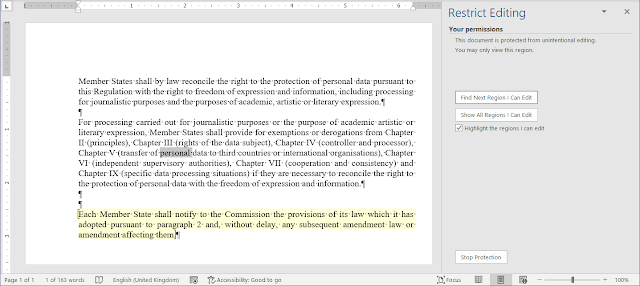
Most of the text here can't be edited in MS Word, but default CAT tool filters cannot exclude it.

Only the highlighted text can be edited in the word processor, and that was also the only text to be translated. The real files were much larger than this example, of course, and the text to be translated was interspersed with a lot of text to be left alone. What can you do?

It was interesting to see the various "solutions" offered, some of which involved begging or instructing the customer to do one thing or another, which is not always a practical option. And imagine the hassles of any kind of manual selection, copying and replacement if you have hundreds of pages like this. So some kind of automation is needed, really. Oh, and you can't even hide the protected text. It will import with the default filters of the translation tool, where it will then be indistinguishable from the actual text to be translated and it can be modified. In other words, bye-bye "protection".

What can be done?

There are a number of possibilities that fall short of developing a new option for import filters, which could take years given the often sluggish development cycles for any major CAT tool. One would be...

... to consider that a Microsoft Word DOCX file is really a ZIP archive with a bunch of stuff inside it. That stuff includes a file called document.xml, which contains the actual text of the MS Word document:


That XML file has an interesting structure. All the document text is in one line as one can see when it is opened in a code editor like Notepad++:


I've highlighted the interesting part, the part with the only text I want to see after importing the file for translation (i.e. the text for which editing is not restricted in MS Word). Ah yes, my strategy here is to deal with the XML text container for the DOCX file and ignore the rest. When the question was raised, I knew there must be such a file, but despite exploring the internal bits of MS Office files with ZIP archive tools for about a decade now, I never actually had occasion to poke around inside of document.xml, and I knew nothing of that file's structure. But simple logic told me there must be a marker there somewhere which would offer a solution.

As it turned out, the relevant markers are a set of tags denoting the beginning and end of a text block with editing permission. These can be seen at the start and finish of the text I highlighted in the screenshot. So all that remains is to filter that mess. A simple thing, really.

In memoQ, there is a "filter" which is not really a filter: the Regex Text Filter. It's actually a toolkit for building filters for text-based files, and XML files are really just text files with a lot of funky markup. I don't care about any of that markup except in the blocks I want to import, so I customized the filter settings accordingly:


A smattering of regular expressions went a long way here, and the expressions used are just some of many possible ways to parse the relevant blocks. Then I added the default XML filter after the custom regex text filter, because memoQ makes filter sequencing of many kinds very easy that way. This problem can be solved with any major CAT tool I think, but I don't have to think very hard about such things when I work with memoQ. The result can be sent from memoQ as an XLIFF file to any other tool if the actual translator has other preferences. Oh, the joys of interoperable excellence....
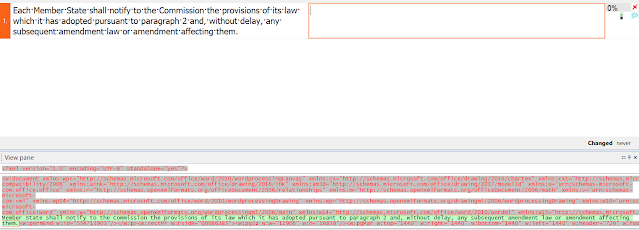
The imported text for translation, with preview 

After translation, document.xml is replaced in the DOCX file by the new version, and the work is done, the "impossible" accomplished without any new features added to the basic toolkit. Computer assistance is all very well, but without brain-assisted translation you're more likely to achieve half the result with double the effort or more.


Aug 5, 2021

Workflow Wednesday: Getting started with memoQ templates


Recorded Aug 11, 2021

It has been more than seven years since memoQ introduced the use of project templates, and although the default method of project creation involves templates when the New Project icon is clicked on the Project ribbon, most users stick with the examples provided, venturing little beyond them, or they use the old Project Wizard and avoid templates altogether. It took me some years to really get my head around the use of project templates in memoQ, and the fully configured sample templates included with installation and made to specifications that were seldom aligned to my needs were not particularly helpful.

When I finally did understand how templates could revolutionize my productivity in local and online projects, I responded to help requests by some LSP consulting clients by providing fully configured templates to address all the problems they listed with the often complex needs of their high volume clients. And to my surprise, most of these configurations went unused. The project managers were simply overwhelmed. As I had been for nearly six years.

And then a colleague's request to help with a filter for a package type not included in memoQ's standard configuration opened my eyes to the importance of simplicity. I had to use a template for that particular challenge, and the template allowed easy import of GLP packages full of TXLF files and did no other special thing.

A weekend of training with project managers from a local LSP showed that this approach could clear up the confusion often caused by immediate confrontation with "kitchen sink" templates as an introduction. When the team shared their desires of "just one thing" to make their work easier and saw how simply that one thing could be accomplished, the understood the value of templates quickly and were soon able to build more sophisticated templates as their confidence grew and they dared tread just a bit farther. Step. By. Step. 

So this webinar took a different approach to templates than you have probably seen so far, emphasizing simplicity and simple needs as a foundation for robust processes and automation. I had no intention of talking about all the myriad options for configuration and automation, though some of these were discussed in the Q&A. This talk is for people who are confused by templates. Who think they aren't really of any use for what they do. Or who are even scared stiff of them. So enjoy the recording (best viewed on YouTube, where you can take advantage of the time-coded table of contents).

Jun 21, 2021

Get a Q about translation!


Once again, my friends at memoQ Ltd., the software artists formerly known as Kilgray, are offering a great deal:

30% discount

on new licenses for the Translator Pro edition of memoQ, the most versatile professional platform for organizing and performing translation work. The relevant sales page can be found HERE.

Many people who use memoQ these days are only familiar with the limited WebTrans versions linked to a server for slavelancing; with your own desktop edition of memoQ Translator Pro, you need no licenses allocated by server operators and have far more control over the resources used in projects based on remote servers. And, of course, total control over all the projects on your local computer, without dependence on sometimes unreliable online connections.

A memoQ license often makes a lot of sense for translators and reviewers who prefer to work with other tools as well. Each platform for computer-aided translation has its own unique set of characteristics, such as the file formats it can process (a major, major point) and the kinds of operations it can perform to translate, edit, review and quality check texts. This is why, for example, I keep a license of Trados Studio on hand, because certain types of files can be prepared better with that tool, but the actual translation after preparation works better for me in memoQ. Conversely, if you are a user of another tool, such as Trados Studio or Wordfast, file formats which cannot be handled easily in those tools can often be prepared in memoQ as an intermediate stage and then translated in your preferred tool. And powerful features like memoQ's Regex Text Filter, which is basically a build-you-own-filter toolkit for any sort of crazy client-cooked text-based data format, enable memoQ to "serve" a wide variety of other platforms. Just a week ago, for example, I used that feature to build an import filter for the *.ctm format used in Community Trade Mark information in the EU so that XLIFF files could be prepared for memoQ, Trados Studio, etc. and translators and reviewers would no longer have to suffer nightmare's from the EU's badly programmed translation software.

This special price on new licenses is also relevant for current users of memoQ who have not had a support and maintenance agreement (SMA) for some years. The annual SMA cost of memoQ Translator Pro is 20% of the list price of the software (€620) or €124 per year (or the equivalent in other currencies). This entitles the user to deeper-level support and access to all upgrades released during the term of the SMA, even if these are not installed by the time an SMA lapses. Some think there is no "value" in that, because they ask all their questions on a listserve or a Facebook user group, but I've had too much personal experience with corrupted customer files rescued by my Hungarian Heroes to give much credit to that opinion. The memoQ Support team is honestly the best in its class. I have five decades now of experience with software support teams on which I base that opinion. On more platforms than most people can or should imagine.

There is some confusion and occasional resentment about memoQ's policy of cumulating costs for the SMA if someone wants to renew in order to access features in a new version. If you "skip" two years, the cost of those "missing" years is added to the cost of your renewal, and at some point it's just cheaper to buy a new license. What's that point? Let's do the math. There is usually at least some opportunity to get a 30% discount deal at least once a year, and some professional organizations have continuous access to that rate, which would currently be €434 (or about US$ 515 according to xe.com, but if you are in the US or somewhere else and plan to pay in US currency, please check the sales page for the actual price). So...

(434 new license cost)/(124 SMA per year) = 3.5 years

In other words, if you feel you don't need support from the dedicated experts who make the software and need to eat and pay their water and electricity bills just like you, then upgrade (pay the SMA) only every five years (one free year of SMA comes with each new license) and you'll save a little bit of money. This approach actually works best for people who are only occasional users or who rely on other tools for their routine work. The memoQ license continues to work indefinitely with or without the SMA under any Windows operating system with which it is compatible. Unlike a Wordfast or Memsource license, for example, it isn't a subscription which lapses after some period. I still run into memoQ users with ten year old software, and it works just fine for them, and they don't do the SMA. I've heard discussions of possible memoQ subscription (SaaS) models, and there is a cloud-based server that uses that model, but that's not what this special Translator Pro deal is about.

memoQ has a lot to offer, and the user community is full of really great people who offer mutual support for a lot of really tough challenges, as one also finds for many other leading commercial and Open Source tools. As a consultant for translation technology with over 5 decades of IT experience now, I try to make fair comparisons of usability and value and invest what personal time I can afford (or someone pays me to afford) to see what works best for a given individual or organization. And more often or not, the answer UI find is "memoQ". Even when my friends in the company piss me off with some awful bug in a new or old release or disappoint me with some policy with which I vehemently disagree, and in a fury I think, "Damnit, I am going to switch to X!", I never find that X > Q.

So for all of us in translation, even those without a clue, maybe it's time to get a Q. It also matters to me that the people behind it all actually do care about what we do.

Jun 12, 2021

The right Ideas venue for #memoQ in #xl8

To request access to the memoQ Ideas Portal, e-mail ideas@memo.com

******

Yesterday I had an interesting chat with some of the memoQ team involved with the new Regex Assistant in memoQ 9.8, and before we finished, one of the fellows in the session offered me a tour of that "development portal" described in a January 2021 blog post but which I had never accessed myself, having seen similar user forums for other tools go straight down the toilet after many people had invested a lot of effort in them. However, in this case, I was quite surprised by the quality of what I saw, and then tweeted:

This thing really does look good, and I don't mean just its clean appearance:


As far as I can tell, the thing is implemented with WordPress; it uses gravatars for those users who want to have a chosen image appear by their posts and comments. The official company explanation of the portal, its purpose and how to use it is here.

One user had this comment about the new platform for suggestions:
Although memoQ's support team is generally excellent, they deal with tens of thousands of users and their ongoing troubles, and the form letters they used to send for requested features often had a somewhat impersonal feel, which frustrated many people. And there was little chance to see if others had similar requests or to discuss these. All that has changed for the better with this new portal.

The most encouraging thing for me, however, is the clear commitment to this platform which I saw in the memoQ product owner, Zsolt Varga, in a group chat with another responsible person. He's a consummate professional and no bullshitter, and it's clear he plans to watch the portal closely to inform efforts of many kinds with memoQ software.

So, for now I have abandoned my initial reservations about yet another user campaign, and I am taking this as seriously as the decision-makers I trust are. My friends at memoQ will probably also welcome the respite from late-night e-mails and Skype harangues about things I feel are harming the productivity of many of my LSP and independent friends in the translation sector. Many people in the translation world, including some of my closest friends, mistake what I actually do. For more than twenty years now, I have been more of a consultant, occasionally a developer for translation workflow solutions and training or coaching. Yes, I translate a lot, though less in recent years as I prepare for a quiet retirement with my ducks and goats, but I have this bad habit as a former research scientist of turning almost every freakin' translation project into some kind of study, though my clients are usually spared the knowledge and the burden of results from these studies. Most of my time lately is spent training translators and project managers privately. So in any case, I am really, really chuffed, as my British friends would put it, to see the memoQ Ideas Portal, which is, I believe, the best venue so far for memoQ users of every kind to tell the makers what we really need.

So take your ideas and wishes for a better memoQ here: https://ideas.memoq.com/

And now I have to get off my ass and contribute, or I'm going to lose a bet and have to pick up a really, really big bar tab at the next memoQ Fest. So won't you join me? At the Portal, I mean. Well, in Budapest at the next memoQ Fest too, assuming we all manage to get our vaccinations and don't die of the next plague or get blown up by all those jihadis for other CAT tools out there....

We need better backups! Vote for this!!!